Chapter 5January 24, 2026
Post-production and Screening
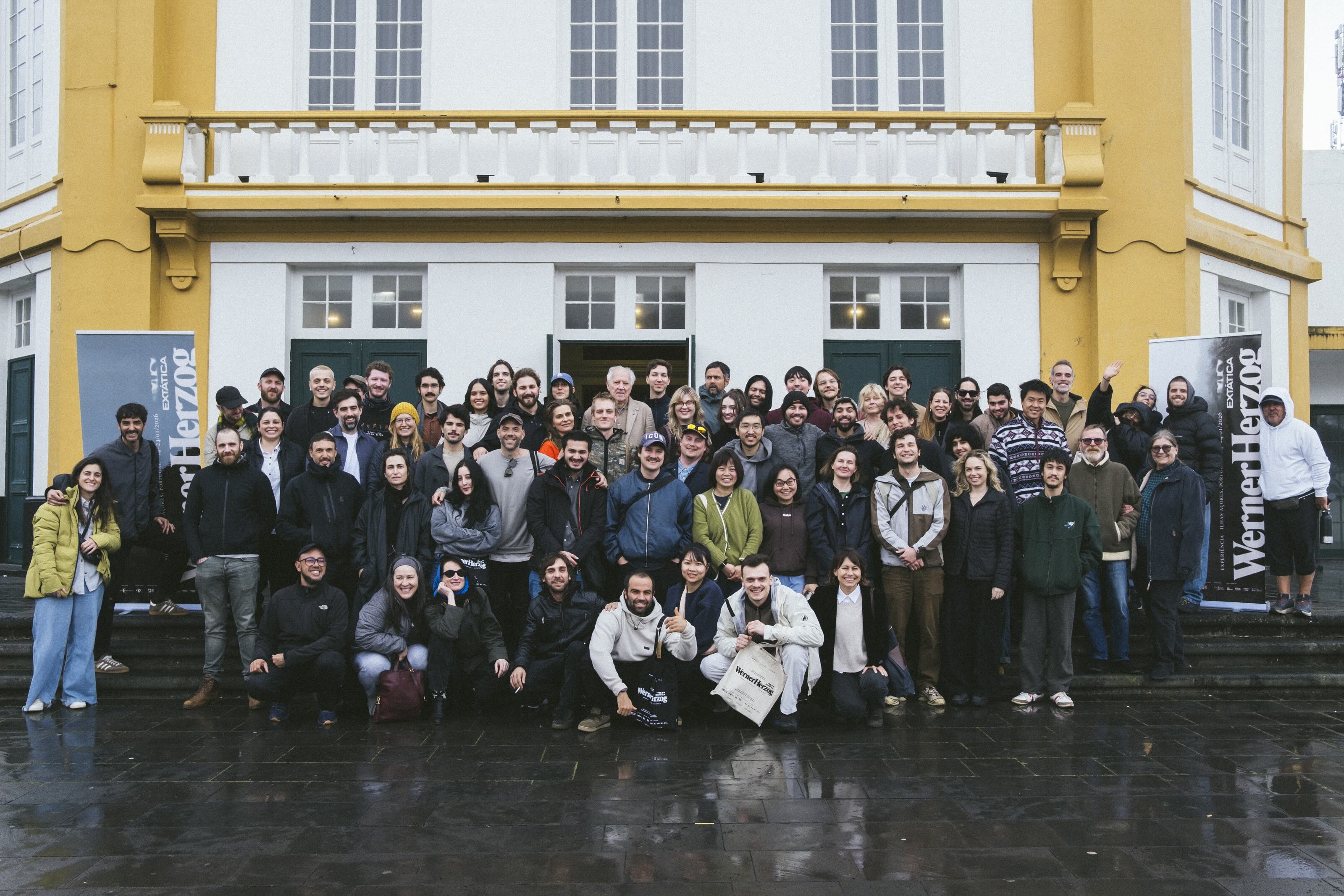
Location:Sao Miguel - Azores
We had two days of post-production where all the editors gathered in the meeting room to finish the short films. Werner Herzog, Liliana, and the Extática Cine team would stop by to supervise, keeping an eye on the process and trying to help us meet the deadline.
Juan had an added, very basic problem: he had brought his Mac Mini from San Juan, which meant he didn't have a monitor to edit comfortably. In his hotel room, he had set up a somewhat makeshift workstation: he took the TV off the wall and placed it on the desk to use as a screen so he could work in peace. When we found out that editing was a group activity and that we absolutely had to be in the meeting room, it was a downer, because Juan had prepared for a different dynamic, but we adapted as best we could anyway.
Given the pressure we were under, we made a decision: not to show the cut until the day of the screenings. We didn't share it in the circle, except with a very small group of colleagues we had become close friends with. We did show it to them, and it was key, because they helped us see things in the editing that we were missing.
At that point, Lila Izquierdo helped us immensely. When she saw the cut, she gave us a lot of advice, and we ended up applying almost all of it. That was what ultimately gave life and quality to the film, especially in the way the story was told. Because we had the resources: photography, acting, scenes, locations. The story was clear. What was holding us back was the narrative style, the exact way we were going to build the experience in the edit. And there we felt a very strong pressure. Juan was on the verge of a panic attack that day; at one point, he had to go down to the beach, stay with the sea and the waves, breathe, and lower his energy a bit to be able to sit back down and work.
To make matters worse, during the workshop Juan's room had gradually become a place where, when the bar closed at 12, several of us would end up hanging out, sharing music, conversation, and some wine. The night before the heavy post-production began, that's exactly what happened: a really nice gathering formed and we stayed up very late with people from the team and the workshop, including Mark, Yuca, and Paulina. It was beautiful, but the next day the body paid a steep price for it.
Juan woke up destroyed. Alcohol gives him a heavy hangover and also ruins his sleep, so that time was even worse: he slept very little and woke up with a mix of extreme exhaustion and nerves. So we reorganized the day as best we could. He asked Nicolás to move forward with the editing during the morning, until noon, so the project wouldn't stall. The idea was for Juan to recover some energy and then join in with a clearer head.
When Juan plugged back in, he connected the computer and the drives and started working based on the narrative style Nicolás had been putting together, but there was a problem: that assembly was short, almost like a three-minute teaser. With the material we had, telling everything in three minutes made the story feel like a trailer, and Juan didn't want that. The intention was for the film to breathe and function as a film, not as a promise.
At half past three in the afternoon, Juan called Nicolás, quite desperate, but with a concrete idea: he had found the structure. He basically told him that everything he would put in to be able to edit it quickly was already placed on the timeline, and from there it could be fine-tuned. From that moment on, we both set to work intensely: Nicolás operated the computer and Juan guided the decisions, indicating how to stretch the narrative, where to tighten, where to let it breathe, and how to sequence the emotional punch without it feeling underlined.
In addition, we finished resolving the edit with Lila's corrections and with very good input from Francisca, who gave us a point of view that organized several of our doubts and helped us unblock post-production decisions.
The deadline was at 8 PM, and the truth is that at 7:50 we were still racing behind the cut. It wasn't that we were just starting, but there was too much left to be calm. That's when we came up with a somewhat suicidal but necessary move: sending a Google Drive link as if the file was already uploading, to buy time without stopping the process. We gambled a bit on the chance that Yuca wouldn't open the link or try to download it before we finished. And, thank God, that's exactly how it went.
We finished the short film around four in the morning. And on top of that, while we were still wrapping everything up, some peers stayed quite late in the room so we could help them with subtitles and technical details. Reaching that final cut was a brutal effort, but when we finally had it and Juan reviewed it on his computer, another tremendous scare appeared: the adjustment layer was out of sync. The first few frames had no color grading, and the correction only kicked in after five seconds. It was unacceptable.
Juan woke Natal up and told her they had to render it again. They fixed the adjustment layer, re-exported it, and left the file uploading to Drive while there was no energy left, only inertia. At seven in the morning, Juan got up, downloaded the short film, transferred it to a flash drive, and went to the dining room for breakfast.
There he ran into Yuca, who was just downloading all the short films from Drive. Juan walked up with the flash drive and told him that he had made changes at dawn and asked if he could give him a new version. Yuca said yes, that it was no problem. So we gave him the new file, and for the first time in hours, we felt like the ground had reappeared beneath our feet.
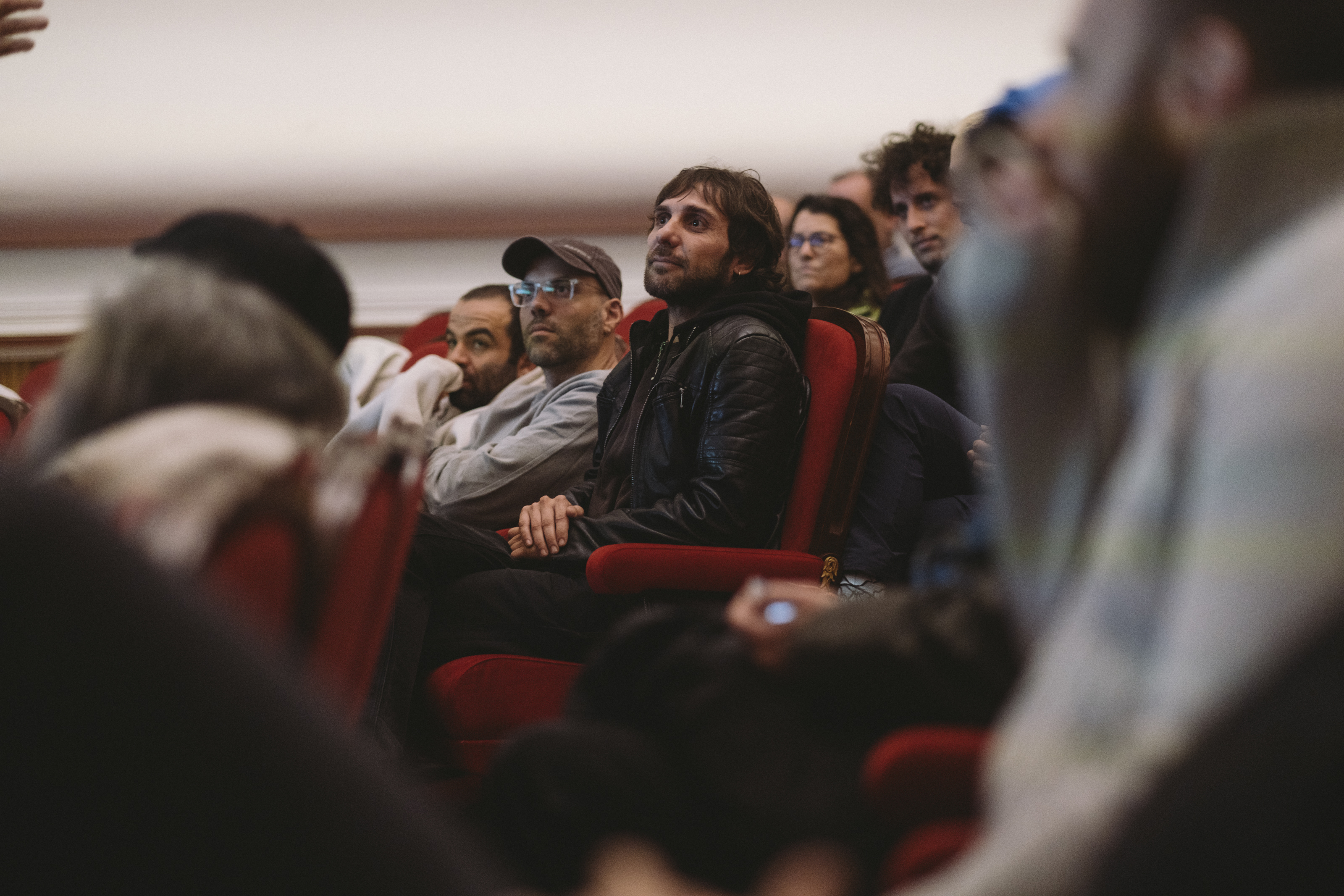
At exactly eight o'clock, the bus left the hotel for the center of Ponta Delgada for the screening. We went to a theater in the Ribeira Grande area (we don't remember the exact name of the place), but it was beautiful: a good screen, a very decent projector, and a sound system that was really good. About 25 films were screened there, maybe even a few more because some pairs split up.
We had received the screening order by email (Bruno had also received it because he was a volunteer for the workshop) and we found out we were going third. For us, that was a relief: not having to wait all afternoon, not dealing with an exhausted audience, and quickly seeing how people reacted.
And something very powerful happened. Our short film was third, yet it was one of the most applauded and one of the ones that moved people the most. People identified with it emotionally and practically, beyond the fact that it was a fiction inspired by a true event. We felt we had achieved what, for us, cinema is meant to do: to move something within the viewer, to slightly shift their way of looking at a subject, a life, a truth.
That's also why we had chosen a fairly classic way of telling the story: a "normal" film on the outside—nice locations, careful photography, elegant staging—but with a narrative carrying enough weight that the most powerful element wasn’t the aesthetics, but what the story was conveying. Even the detail of the protagonist's sport added to it without being distracting: he practices spearfishing, and that provided texture, world-building, identity.
After the screening, Herzog came over to congratulate us. As he always did, he stood up to give feedback after each short film ended, and what he said about ours stuck with us: that it was a clear example of how a film, in a single day, could transform from a disaster into a truly good film.
Only after that day were we able to unwind. Thus began the stretch of relaxing, organizing the trip back, and grounding everything we had experienced. That part goes into the next chapter.
Photo Gallery
1 / 7
Comments (0)
No comments yet. Be the first!